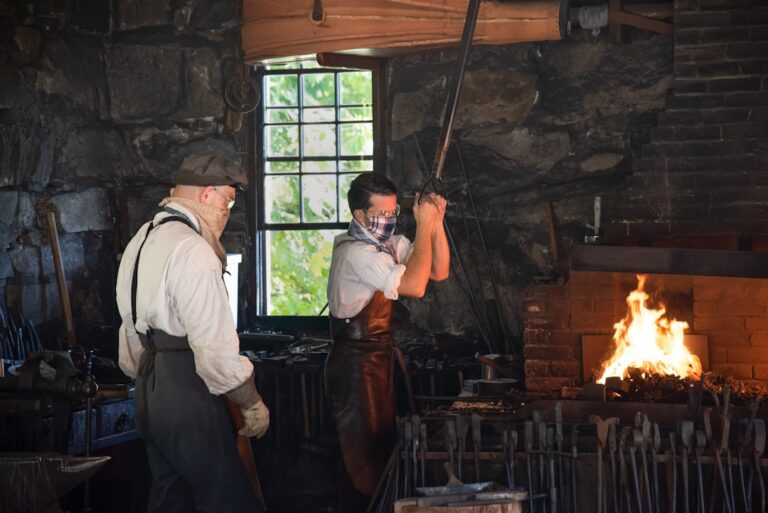
As we delve into the rich tapestry of blade smithing, we find ourselves tracing back to ancient civilizations where the craft first took root. The earliest known blades were forged from copper and bronze, materials that were readily available and relatively easy to manipulate. These primitive tools were not merely functional; they held significant cultural value, often being used in rituals and as symbols of power.
As we explore the evolution of blade smithing, we see how techniques were passed down through generations, with each culture adding its unique flair. The advent of iron and steel revolutionized the craft, allowing for stronger and more durable blades that could withstand the rigors of battle and daily use. In more recent history, the Industrial Revolution marked a pivotal shift in blade smithing.
The introduction of mechanized processes allowed for mass production, making blades more accessible to the general public. However, this shift also led to a decline in traditional craftsmanship as many artisans struggled to compete with factory-made products. Yet, as we look around today, we notice a resurgence of interest in handmade blades, driven by a desire for quality and individuality.
This blend of ancient techniques and modern technology has breathed new life into blade smithing, ensuring its relevance in our contemporary world.
Key Takeaways
- Blade smithing has a rich history, from ancient techniques to modern innovations, showcasing the evolution of the craft over time.
- Understanding the essential tools and materials for crafting blades is crucial for achieving high-quality results in blade smithing.
- Heat treatment plays a vital role in blade smithing, as it helps achieve the perfect balance of strength and flexibility in the finished blade.
- Mastering the art of blade design is essential for creating functional and aesthetic masterpieces that stand out in the market.
- Balancing tradition and innovation is key in blade smithing, as it allows for the incorporation of old-school techniques with modern technology to enhance the craft.
- Navigating the market and building a successful brand is crucial for those in the business of blade smithing, requiring a strategic approach to stand out in the industry.
- Blades hold cultural significance, with symbolism and rituals associated with blade making that have been passed down through generations.
- The future of blade smithing is shaped by trends and innovations in the 21st century, showcasing the ongoing evolution of the craft.
The Essential Tools and Materials for Crafting Blades: An In-Depth Guide
When we embark on the journey of blade smithing, understanding the essential tools and materials is crucial for our success. At the heart of our workshop lies the forge, where we heat our metal to a malleable state. Traditional forges can be wood or coal-fired, while modern smiths often opt for propane or electric forges that provide consistent heat.
Alongside the forge, we require an anvil, a sturdy surface that allows us to shape our heated metal into the desired form. Hammers of various sizes and shapes are indispensable tools in our arsenal, enabling us to manipulate the metal with precision. In addition to these foundational tools, we must also consider the materials we use.
High-carbon steel is a popular choice among smiths due to its ability to harden effectively while maintaining flexibility. Other materials, such as Damascus steel, offer unique aesthetic qualities and performance characteristics that appeal to both collectors and users alike. As we gather our tools and materials, we also need to think about safety equipment—gloves, goggles, and aprons are essential to protect ourselves from the hazards of working with hot metal and sharp edges.
By equipping ourselves with the right tools and materials, we set the stage for creating exceptional blades that reflect our skill and artistry.
The Importance of Heat Treatment in Blade Smithing: Achieving the Perfect Balance of Strength and Flexibility

Heat treatment is a critical process in blade smithing that can make or break our creations. It involves heating the blade to a specific temperature and then cooling it rapidly to achieve desired properties such as hardness and toughness. As we engage in this intricate dance of temperature control, we must be mindful of the type of steel we are using, as different alloys respond uniquely to heat treatment.
For instance, quenching a high-carbon steel blade in oil or water can yield a hard edge capable of retaining sharpness over time. However, achieving the perfect balance between strength and flexibility is no simple task. If we overheat or improperly cool our blades, we risk creating brittle edges that can shatter under stress.
Conversely, if we do not heat them enough, we may end up with blades that are too soft to hold an edge effectively. This delicate balance requires not only technical knowledge but also intuition developed through experience. As we refine our heat treatment techniques, we gain a deeper understanding of our materials and how they behave under different conditions, ultimately leading us to create blades that are both resilient and reliable.
Mastering the Art of Blade Design: Creating Functional and Aesthetic Masterpieces
| Blade Design Metrics | Functional | Aesthetic |
|---|---|---|
| Sharpness | High | Medium |
| Durability | High | Low |
| Balance | Good | Excellent |
| Material | Steel | Damascus |
As we immerse ourselves in blade smithing, we quickly realize that design is as much an art as it is a science. The process begins with conceptualization—what purpose will our blade serve? Whether it’s a hunting knife, a chef’s knife, or a decorative piece, each design must consider functionality alongside aesthetics.
We often sketch our ideas on paper or use digital tools to visualize the final product before we even touch the metal. This planning phase allows us to experiment with different shapes, sizes, and features that will enhance both usability and visual appeal. Once we have a clear design in mind, we move on to the actual crafting process.
Here, our skills come into play as we shape the blade according to our vision. We pay close attention to details such as the curvature of the edge, the thickness of the spine, and even the ergonomics of the handle. Each element contributes not only to the blade’s performance but also to its overall beauty.
As we polish and finish our creations, we take pride in knowing that each blade is a reflection of our dedication to both function and form—a true masterpiece born from our passion for smithing.
The Role of Tradition and Innovation in Blade Smithing: Balancing Old-School Techniques with Modern Technology
In our journey through blade smithing, we often find ourselves at a crossroads between tradition and innovation. On one hand, there is immense value in preserving age-old techniques that have stood the test of time. These methods connect us to our ancestors and remind us of the craftsmanship that has been passed down through generations.
Techniques such as hand-forging and pattern-welding not only produce exceptional blades but also carry stories and cultural significance that enrich our craft. On the other hand, embracing modern technology can enhance our capabilities in ways previously unimaginable. Advancements in metallurgy allow us to experiment with new alloys that offer superior performance characteristics.
Computer-aided design (CAD) software enables us to create precise models before forging begins, reducing waste and improving efficiency. By integrating these innovations into our practice while respecting traditional methods, we create a unique blend that honors the past while pushing the boundaries of what is possible in blade smithing.
The Business of Blade Smithing: Navigating the Market and Building a Successful Brand

As we transition from hobbyists to professional blade smiths, understanding the business side of our craft becomes essential. The market for handmade blades has grown significantly in recent years, driven by consumers seeking quality over mass-produced alternatives. To navigate this competitive landscape successfully, we must develop a strong brand identity that reflects our values and craftsmanship.
This includes everything from designing an eye-catching logo to establishing an online presence through social media platforms and e-commerce websites. Building relationships within the community is equally important; attending trade shows, participating in local markets, and collaborating with other artisans can help us gain visibility and credibility. We must also consider pricing strategies that reflect both the quality of our work and the time invested in each piece.
As we establish ourselves in this niche market, it’s crucial to remain adaptable—listening to customer feedback and staying informed about industry trends will help us refine our offerings and ensure long-term success.
The Cultural Significance of Blades: Exploring the Symbolism and Rituals Associated with Blade Making
Blades have held profound cultural significance throughout history, often symbolizing power, honor, and craftsmanship. In many cultures, blades are not merely tools but are imbued with spiritual meaning—used in rituals or passed down as heirlooms from one generation to another. As we engage in blade smithing, we become part of this rich narrative that transcends time and geography.
Each blade we create carries with it a story that connects us to those who came before us. Rituals surrounding blade making can vary widely; some cultures celebrate the forging process itself as a sacred act while others may incorporate specific ceremonies when presenting a blade as a gift or during significant life events such as weddings or coming-of-age ceremonies. By understanding these cultural contexts, we deepen our appreciation for our craft and recognize the responsibility that comes with creating blades that may hold significant meaning for their future owners.
The Future of Blade Smithing: Trends and Innovations Shaping the Craft in the 21st Century
As we look toward the future of blade smithing, it’s clear that trends are evolving alongside technological advancements. One notable trend is the increasing demand for sustainable practices within our craft. Many consumers are becoming more conscious of their environmental impact; thus, sourcing materials responsibly and minimizing waste during production are becoming essential considerations for modern smiths.
Additionally, innovations such as 3D printing are beginning to make their mark on blade design and production processes. While traditional forging will always hold its place in our hearts, these new technologies offer exciting possibilities for experimentation and creativity. As we embrace these changes while remaining true to our roots, we position ourselves at the forefront of an ever-evolving craft—one that honors tradition while embracing innovation for generations to come.
In conclusion, blade smithing is a multifaceted art form steeped in history yet continually evolving with modern influences. By understanding its past, mastering essential techniques, balancing tradition with innovation, navigating business challenges, appreciating cultural significance, and anticipating future trends, we can ensure that this timeless craft remains vibrant and relevant in today’s world.
If you are interested in learning more about blade smithing, you may want to check out the article on Far Hills Forge’s website titled “Hello World.” This article provides a great introduction to the art of blade smithing and offers valuable insights for beginners. You can read the article here.