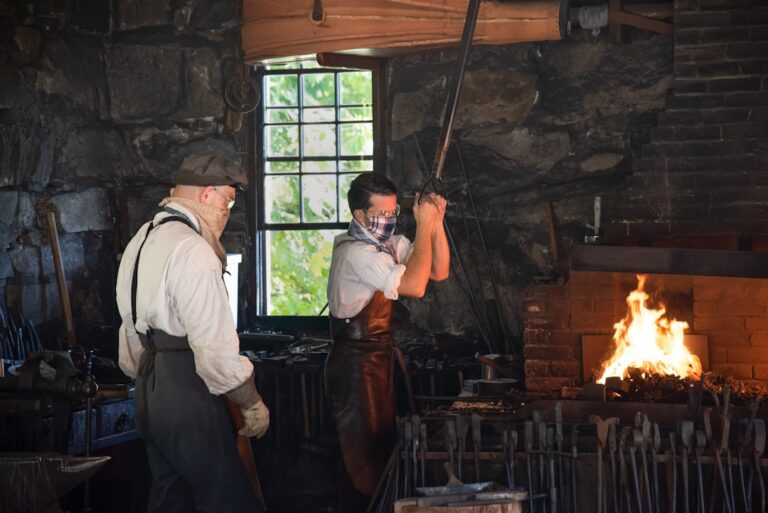
In the 18th century, the blacksmith held a pivotal role within the fabric of society. As artisans skilled in the manipulation of metal, blacksmiths were indispensable to both rural and urban communities. Their work extended far beyond the mere creation of tools and implements; they were the backbone of local economies, providing essential services that supported agriculture, trade, and daily life.
In a time when most goods were crafted by hand, the blacksmith’s forge became a hub of activity, where the rhythmic sound of hammer striking anvil resonated through the air, symbolizing both craftsmanship and community. Moreover, blacksmiths were often seen as problem solvers, capable of repairing and creating a wide array of items that were crucial for survival and progress. From horseshoes that ensured the mobility of livestock to plows that facilitated farming, their contributions were vital.
In many ways, they were the unsung heroes of their communities, often working long hours to meet the demands of their neighbors. The blacksmith’s forge was not just a place of work; it was a gathering spot where people exchanged news, shared stories, and forged social bonds. This communal aspect of blacksmithing underscored its importance in 18th-century society, as it fostered connections among individuals and reinforced the sense of belonging within a community.
Key Takeaways
- The blacksmith played a crucial role in 18th century society, providing essential tools and equipment for agriculture, transportation, and construction.
- Tools and techniques of the 18th century blacksmith included the use of a forge, anvil, hammer, and tongs to shape and manipulate hot metal into various objects.
- The blacksmith in colonial America was responsible for creating a wide range of items, from household goods to weapons, contributing to the development of the new nation.
- Blacksmithing was a respected trade and craft in the 18th century, requiring years of apprenticeship and skill to master the art of metalworking.
- The evolution of blacksmithing in the 18th century saw advancements in technology and techniques, leading to increased production and efficiency in metalworking.
- Famous blacksmiths of the 18th century, such as Paul Revere, made significant contributions to their communities and the development of the nation.
- The blacksmith’s impact on industrialization in the 18th century was significant, as their work was essential in the production of machinery and tools for the growing industrial economy.
- The legacy of 18th century blacksmithing can still be seen today in the preservation of traditional techniques and the continued appreciation for handcrafted metalwork.
Tools and Techniques of the 18th Century Blacksmith
The tools and techniques employed by blacksmiths in the 18th century were as varied as the items they produced. At the heart of their craft was the forge itself, a structure designed to heat metal to a malleable state. Fueled by coal or charcoal, the forge allowed blacksmiths to reach the high temperatures necessary for shaping iron and steel.
Accompanying this essential tool were various hand tools, including hammers, tongs, chisels, and anvils, each serving a specific purpose in the shaping and finishing processes. The anvil, often regarded as the blacksmith’s best friend, provided a sturdy surface for hammering and shaping metal into desired forms. In addition to these fundamental tools, blacksmiths employed a range of techniques that showcased their expertise.
One such technique was forging, which involved heating metal and then hammering it into shape. This process required not only physical strength but also a keen understanding of metallurgy and the properties of different metals. Blacksmiths also utilized techniques like welding and tempering to enhance the durability and functionality of their creations.
The ability to create intricate designs through techniques such as repoussé (shaping metal by hammering from behind) demonstrated their artistic flair alongside their technical skills. This blend of artistry and craftsmanship was what set skilled blacksmiths apart from their peers.
The Role of the Blacksmith in Colonial America

In Colonial America, blacksmiths played an integral role in shaping both the economy and daily life. As settlers established new communities, the need for skilled tradespeople became increasingly apparent. Blacksmiths were among the first artisans to set up shop in these burgeoning towns, providing essential tools and equipment that supported agriculture and trade.
Their work was crucial for farmers who relied on sturdy plows, hoes, and other implements to cultivate their land. Without the blacksmith’s expertise, many settlers would have struggled to thrive in their new environments.
Furthermore, blacksmiths often took on additional roles within their communities.
They were not only craftsmen but also advisors and problem solvers who understood the needs of their neighbors. In many cases, they served as local leaders or figures of authority due to their knowledge and skills.
Their ability to create custom pieces meant that they could cater to specific requests from clients, further solidifying their importance in everyday life. As communities grew and diversified, so too did the blacksmith’s role; they began to produce more specialized items such as decorative ironwork for homes and businesses, showcasing their versatility and adaptability.
Blacksmithing as a Trade and Craft in the 18th Century
| Year | Number of Blacksmiths | Types of Products | Tools Used |
|---|---|---|---|
| 1700 | 500 | Horseshoes, nails, tools | Anvil, hammer, tongs |
| 1750 | 750 | Wrought iron gates, household items | Forge, bellows, chisels |
| 1800 | 1000 | Fireplace accessories, agricultural tools | Swage block, hardy tools, punches |
Blacksmithing in the 18th century was not merely a job; it was a respected trade that required years of training and dedication. Apprenticeships were common, with young individuals learning the craft under the guidance of experienced blacksmiths. This system ensured that knowledge was passed down through generations, preserving techniques and skills that had been honed over centuries.
The apprenticeship model also fostered a sense of community among blacksmiths, as they often collaborated on larger projects or shared resources. As a craft, blacksmithing encompassed a wide range of specialties. While some blacksmiths focused on agricultural tools, others might have concentrated on creating weapons or decorative items.
This specialization allowed for innovation within the trade; blacksmiths experimented with different techniques and materials to improve their products. The competition among craftsmen spurred advancements in design and functionality, leading to an evolution in both tools and techniques throughout the century. This dynamic environment contributed to the overall growth of blacksmithing as a respected profession.
The Evolution of Blacksmithing in the 18th Century
The 18th century witnessed significant changes in blacksmithing practices due to advancements in technology and shifts in societal needs. As demand for various metal goods increased with population growth and urbanization, blacksmiths adapted by refining their techniques and expanding their offerings. The introduction of new materials such as wrought iron allowed for greater versatility in design and function.
Blacksmiths began to experiment with different alloys and methods of production, leading to stronger and more durable products. Additionally, the rise of industrialization towards the end of the century began to reshape the landscape of blacksmithing. While traditional blacksmithing remained vital for local communities, larger-scale operations emerged that utilized steam power and mechanization to increase production efficiency.
This shift marked a turning point for many blacksmiths; some adapted by incorporating new technologies into their practices while others struggled to compete with mass-produced goods. Despite these challenges, many skilled artisans continued to thrive by focusing on custom work or high-quality craftsmanship that could not be replicated by machines.
Famous Blacksmiths of the 18th Century

Paul Revere: A Multifaceted Craftsman
One notable figure from the 18th century is Paul Revere, who is often remembered for his midnight ride but was also an accomplished silversmith and engraver. His work as a blacksmith included creating intricate metalwork that showcased his artistic talent alongside his technical expertise.
John Houghton: A Pioneer in Ironwork
Another prominent blacksmith was John Houghton, known for his innovative designs in ironwork during the late 1700s. Houghton’s creations included decorative gates and railings that adorned many homes and public buildings in colonial America. His ability to blend functionality with artistry set him apart from his contemporaries and left a lasting impact on architectural design in his community.
Lasting Impact on Cultural Movements
These figures exemplify how individual blacksmiths could influence not only their trade but also broader cultural movements during this transformative period.
The Blacksmith’s Impact on Industrialization in the 18th Century
As industrialization began to take root in the late 18th century, blacksmiths found themselves at a crossroads between tradition and innovation. The demand for metal goods surged as factories emerged, leading to an increased reliance on mass production methods. While some blacksmiths adapted by incorporating new technologies into their practices—such as using steam-powered machinery—others faced challenges as mechanized processes began to dominate production.
Despite these changes, blacksmiths played a crucial role in supporting industrialization by providing essential components for machinery and transportation systems. Their expertise in metallurgy allowed them to create parts that were vital for steam engines, railroads, and other innovations that propelled society forward. In this way, blacksmiths contributed not only to local economies but also to broader industrial advancements that would shape modern society.
The Legacy of 18th Century Blacksmithing Today
The legacy of 18th-century blacksmithing continues to resonate in contemporary society.
The appreciation for handcrafted items has seen a resurgence in recent years, with consumers seeking unique pieces that reflect quality craftsmanship rather than mass-produced goods.
Moreover, historical reenactments and educational programs often highlight the significance of blacksmithing in early American history. These initiatives serve not only to preserve traditional skills but also to educate new generations about the importance of craftsmanship within our cultural heritage. As we reflect on the contributions of 18th-century blacksmiths, we recognize their enduring impact on both our past and present—a testament to the artistry and skill that defined this vital trade throughout history.
If you are interested in learning more about the art of blacksmithing in the 18th century, you may want to check out this article on Far Hills Forge. This website offers a wealth of information on traditional blacksmithing techniques and tools, providing a fascinating glimpse into the world of blacksmiths from centuries past. Whether you are a history buff or a budding blacksmith yourself, this article is sure to pique your interest.