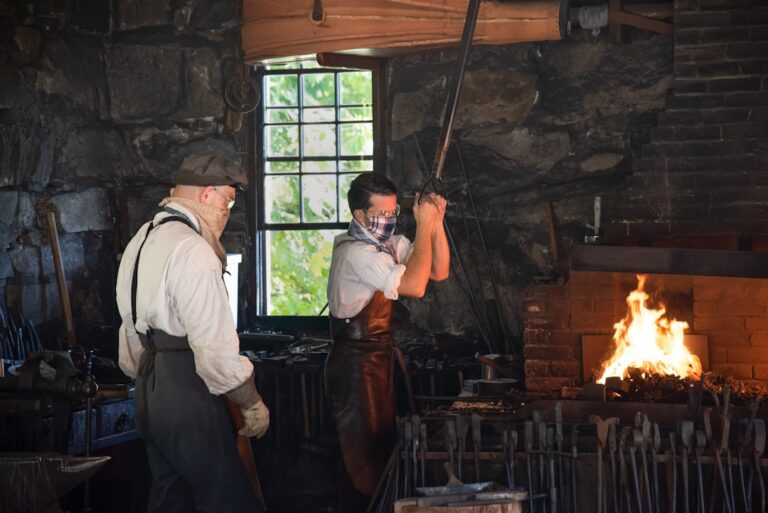
The history of medieval forges is a fascinating journey that takes us back to a time when metalworking was not just a craft but a vital component of society.
The forge became a central hub in villages and towns, where blacksmiths worked tirelessly to meet the demands of their communities.
These early forges were often simple structures, utilizing charcoal as fuel and rudimentary tools to shape iron and other metals. As we moved into the later medieval period, from the 11th to the 15th centuries, the craft of blacksmithing evolved significantly. The introduction of new techniques and the availability of better materials allowed for more intricate designs and stronger products.
The rise of feudalism also played a crucial role in the development of forges, as lords and knights required weapons and armor for their protection and status. This demand led to the establishment of larger, more sophisticated forges that could accommodate multiple blacksmiths and apprentices, creating a thriving industry that would shape the landscape of medieval life.
Key Takeaways
- Medieval forges were essential for creating weapons, armor, and tools during the Middle Ages, and their history dates back to ancient times.
- Blacksmiths played a crucial role in medieval society, not only as skilled craftsmen but also as important members of the community.
- Techniques such as forging, welding, and tempering, along with tools like anvils, hammers, and tongs, were commonly used in medieval forges.
- The artistry of medieval forge work is evident in the intricate designs and decorative elements found in items such as swords, shields, and jewelry.
- Famous medieval forge creations include the legendary swords of Damascus and the ornate gates of medieval castles, showcasing the skill and creativity of blacksmiths.
- The influence of medieval forges on modern metalworking can be seen in the continuation of traditional techniques and the preservation of historical craftsmanship.
- The decline of medieval forges and the rise of industrialization marked a shift towards mass production and the use of machinery in metalworking.
- Preserving and honoring the legacy of medieval forges is important for understanding the history of metalworking and appreciating the craftsmanship of blacksmiths.
The Role of Blacksmiths in Medieval Society
The Backbone of the Medieval Economy
Their work supported not only farmers but also tradespeople who relied on metal tools to perform their crafts. In many ways, blacksmiths were the backbone of the medieval economy, enabling various sectors to function smoothly.
Community Leaders and Advisors
Moreover, blacksmiths were often seen as community leaders. Their skills were highly valued, and they frequently served as advisors on matters related to metalwork and craftsmanship. In some cases, they even participated in local governance or held positions of influence within guilds.
A Bond of Loyalty
The bond between blacksmiths and their communities was strong; they were trusted figures who contributed to both the material and social fabric of medieval life. This connection fostered a sense of loyalty and respect that transcended mere economic transactions.
Techniques and Tools Used in Medieval Forges

The techniques employed in medieval forges were a blend of tradition and innovation. Blacksmiths utilized a variety of tools that have become iconic symbols of their trade. The anvil, hammer, tongs, and bellows were essential components of any forge.
Each tool had its specific purpose, allowing blacksmiths to manipulate metal with precision and skill. The anvil served as a sturdy base for shaping hot metal, while hammers varied in size and weight to achieve different effects on the material. In addition to these fundamental tools, blacksmiths developed various techniques that enhanced their craft.
One such technique was quenching, where heated metal was rapidly cooled in water or oil to harden it. This process was crucial for creating durable weapons and tools. Another important method was tempering, which involved reheating the quenched metal to reduce brittleness while maintaining strength.
These techniques required not only physical skill but also a deep understanding of metallurgy, as blacksmiths had to know how different metals reacted to heat and stress.
The Artistry of Medieval Forge Work
| Forge Work | Artistry | Medieval |
|---|---|---|
| Blacksmithing | Decorative | Armor |
| Ironwork | Intricate designs | Weapons |
| Forging techniques | Skilled craftsmanship | Tools |
While blacksmithing was primarily a practical trade, it also encompassed a significant artistic element. Many blacksmiths took pride in their ability to create not just functional items but also beautiful works of art. Decorative ironwork became increasingly popular during the medieval period, with blacksmiths crafting intricate designs for gates, railings, and even church decorations.
The fusion of utility and artistry allowed blacksmiths to showcase their creativity while still serving their communities. The artistry of medieval forge work was often influenced by regional styles and cultural traditions. For instance, in some areas, blacksmiths incorporated motifs from nature or mythology into their designs, creating pieces that told stories or conveyed symbolic meanings.
This artistic expression elevated the status of blacksmiths beyond mere craftsmen; they became recognized as artists in their own right. The legacy of this artistry can still be seen today in modern metalwork, where the influence of medieval techniques and designs continues to inspire contemporary artisans.
Examples of Famous Medieval Forge Creations
Throughout history, several remarkable creations have emerged from medieval forges that exemplify the skill and artistry of blacksmiths. One notable example is the famous sword known as the “Excalibur,” often associated with King Arthur. While its existence is steeped in legend, the craftsmanship required to create such a weapon reflects the high standards of medieval blacksmithing.
Swords like Excalibur were not only functional but also symbols of power and nobility. Another significant creation is the intricate wrought ironwork found in cathedrals across Europe. Many churches commissioned blacksmiths to create elaborate gates, chandeliers, and decorative elements that adorned their sacred spaces.
These pieces often featured intricate scrollwork and religious motifs, showcasing the blacksmith’s ability to blend functionality with beauty. Such works remain a testament to the enduring legacy of medieval forge creations, capturing the imagination of those who encounter them even centuries later.
The Influence of Medieval Forges on Modern Metalworking

Timeless Techniques
Many contemporary metalworkers still employ traditional methods that originated during the medieval period, such as forging by hand and using coal or charcoal as fuel sources. The principles of metallurgy established by medieval blacksmiths continue to inform modern practices, ensuring that the craft remains rooted in its historical context.
Inspiring Artistry
The artistry associated with medieval forge work has inspired countless artisans today. Many metalworkers draw upon the intricate designs and techniques from this era to create contemporary pieces that pay homage to their predecessors. The revival of interest in traditional crafts has led to a renewed appreciation for blacksmithing as both an art form and a practical trade.
A Lasting Influence
As we explore modern metalworking, we find ourselves continually influenced by the rich heritage established by medieval forges.
The Decline of Medieval Forges and the Rise of Industrialization
As we entered the age of industrialization in the 18th and 19th centuries, medieval forges began to decline significantly. The advent of steam power and mechanization transformed metalworking into a mass-production industry that could produce goods at an unprecedented scale. Factories replaced small-scale forges, leading to a loss of traditional craftsmanship as machines took over tasks once performed by skilled blacksmiths.
This shift had profound implications for society as well. While industrialization brought about increased efficiency and lower costs for metal products, it also resulted in a disconnection from the artisanal practices that had defined blacksmithing for centuries. Many skilled blacksmiths found themselves out of work or forced to adapt to new methods that prioritized speed over artistry.
As we reflect on this transition, we recognize both the benefits and drawbacks of industrialization on the legacy of medieval forges.
Preserving and Honoring the Legacy of Medieval Forges
Despite the decline of traditional blacksmithing practices, efforts have been made to preserve and honor the legacy of medieval forges.
Workshops, demonstrations, and educational programs are being organized to teach new generations about the art of blacksmithing.
Museums also play a crucial role in preserving this heritage by showcasing artifacts from medieval forges and providing insights into the lives of blacksmiths during that era. By celebrating these historical practices, we not only honor those who came before us but also inspire future generations to appreciate the beauty and significance of handcrafted metalwork. As we continue to explore our connection to this rich history, we find ourselves drawn into a world where tradition meets innovation—a testament to the enduring legacy of medieval forges that still resonates today.
If you are interested in learning more about medieval forges, you may want to check out the article “The History of Blacksmithing” on Far Hills Forge. This website offers a wealth of information on traditional blacksmithing techniques and tools, making it a valuable resource for anyone interested in this ancient craft. Whether you are a beginner looking to learn the basics or an experienced blacksmith seeking to expand your knowledge, Far Hills Forge has something for everyone.