Blacksmithing is an ancient craft that has evolved significantly over the centuries. Its origins can be traced back to the Iron Age, around 1200 BCE, when humans first began to extract and manipulate iron from ore. This marked a pivotal moment in human history, as the ability to forge tools and weapons from iron revolutionized agriculture, warfare, and craftsmanship.
As we delve into the history of blacksmithing, we find that it was not merely a trade but a vital part of societal development. The blacksmith was often regarded as a key figure in the community, providing essential tools for farming and construction, as well as creating weapons for defense. As civilizations advanced, so did the techniques and tools of blacksmithing.
The Romans, for instance, refined the craft by introducing new methods of heating and shaping metal. They utilized bellows to increase the temperature of their forges, allowing for more efficient metalworking. The Middle Ages saw blacksmithing flourish in Europe, with guilds forming to regulate the trade and ensure quality craftsmanship.
During this period, blacksmiths not only created functional items but also began to explore decorative elements, leading to the emergence of ornamental ironwork. As we moved into the Industrial Revolution, blacksmithing faced challenges from mechanization but adapted by incorporating new technologies, ensuring its survival into modern times.
Key Takeaways
- Blacksmithing has a rich history dating back to ancient times, evolving from a necessity for survival to a respected craft and art form in modern day.
- The coal forge is a fundamental tool in blacksmithing, requiring a variety of equipment such as tongs, hammers, and anvils for shaping and manipulating metal.
- Mastering the fire is essential in blacksmithing, as controlling temperature and heat distribution is crucial for achieving desired metal shapes and properties.
- Selecting and preparing materials for blacksmithing involves understanding the characteristics of different metals and how they respond to heat and force.
- Techniques and skills for shaping metal include forging, welding, and finishing, allowing blacksmiths to create both functional tools and decorative artwork.
Understanding the Coal Forge: Tools and Equipment
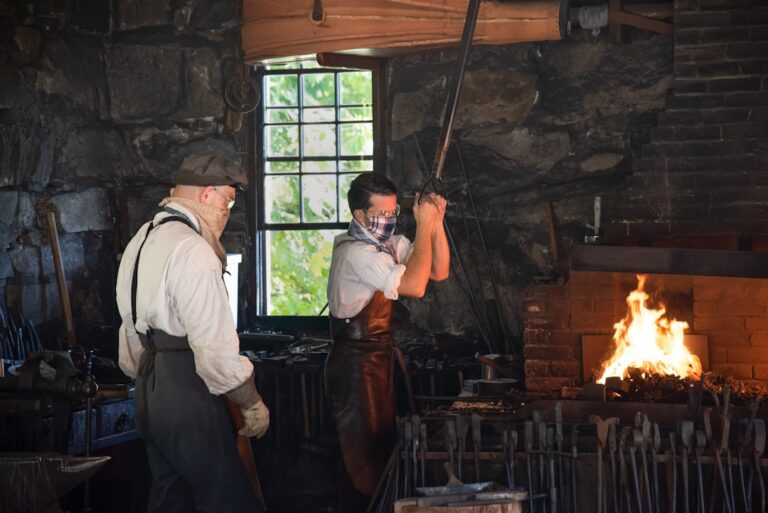
At the heart of blacksmithing lies the coal forge, a crucial piece of equipment that allows us to heat metal to malleable temperatures. The coal forge consists of several components, including the firepot, where the coal is burned; the blower, which supplies air to intensify the fire; and the anvil, where we shape the heated metal. Each element plays a vital role in our blacksmithing process, and understanding their functions is essential for any aspiring smith.
The tools we use in conjunction with the forge are equally important. Hammers come in various shapes and sizes, each designed for specific tasks, from drawing out metal to creating intricate designs. Tongs are indispensable for gripping hot metal safely, while chisels and punches allow us to add details and create holes.
As we familiarize ourselves with these tools and their uses, we begin to appreciate the artistry involved in blacksmithing. The coal forge is not just a source of heat; it is a space where creativity meets craftsmanship, allowing us to transform raw materials into functional and beautiful objects.
Mastering the Fire: Controlling Temperature and Heat Distribution

Controlling fire is one of the most critical skills we must master as blacksmiths. The ability to regulate temperature and ensure even heat distribution can make or break our projects. When we heat metal in the forge, we need to reach specific temperatures depending on the type of metal we are working with.
For instance, wrought iron requires a different temperature than high-carbon steel. Understanding these nuances allows us to achieve optimal results. Moreover, heat distribution is equally important.
We must learn to manipulate the fire’s intensity and position our workpiece within it to achieve uniform heating. This skill requires practice and an intuitive understanding of how different metals respond to heat. As we gain experience, we develop a keen sense of when a piece is ready for shaping—when it glows a bright orange or yellow and becomes pliable under our hammer’s strike.
Mastering fire is not just about technical knowledge; it is about developing a relationship with our materials and understanding their behavior under heat.
Selecting and Preparing Materials for Blacksmithing
| Material | Properties | Preparation |
|---|---|---|
| Steel | Durable, strong | Heating, forging, annealing |
| Iron | Malleable, ductile | Heating, shaping, quenching |
| Coal | High heat output | Breaking into small pieces, sorting by size |
| Charcoal | Low impurities | Carbonizing wood, crushing into small pieces |
The selection of materials is a fundamental aspect of blacksmithing that directly impacts our final creations. We often work with various metals, including wrought iron, mild steel, high-carbon steel, and even exotic alloys. Each material has unique properties that influence its workability, strength, and appearance.
As we embark on a new project, we must consider not only the aesthetic qualities of our chosen metal but also its intended use. Once we have selected our materials, preparation becomes crucial. This process may involve cutting metal to size, cleaning it to remove any rust or contaminants, and sometimes even pre-heating it before forging.
Proper preparation ensures that our work proceeds smoothly and that we achieve the desired results. As we become more experienced in selecting and preparing materials, we develop an eye for quality and an understanding of how different metals can be combined or manipulated to create stunning pieces.
Techniques and Skills for Shaping Metal
Shaping metal is where our creativity truly shines as blacksmiths. We employ various techniques to manipulate hot metal into desired forms, each requiring specific skills and tools. One of the most fundamental techniques is drawing out, where we elongate a piece of metal by hammering it on an anvil’s face.
This technique is essential for creating tools like hooks or handles. Another important skill is upsetting, which involves thickening a section of metal by hammering it down on itself. This technique is often used to create rivets or decorative elements on a piece.
Additionally, bending and twisting are techniques that allow us to create intricate designs and shapes. As we practice these skills, we begin to develop our unique style and approach to blacksmithing. Each strike of the hammer becomes an expression of our artistic vision as we transform raw metal into functional art.
Creating Functional and Decorative Pieces: From Tools to Artwork

Functional Tools
We may forge practical tools such as knives, horseshoes, or garden tools that serve everyday purposes. These pieces require precision and attention to detail, ensuring they are not only effective but also durable.
Decorative Artwork
Blacksmithing also enables us to explore our artistic side through decorative pieces like sculptures or ornamental gates.
The Fusion of Functionality and Artistry
The fusion of functionality and artistry is what makes blacksmithing so captivating; every piece tells a story about its creation process and the hands that shaped it. As we navigate this duality in our work, we find joy in both crafting useful items and expressing ourselves through art.
Safety Measures and Best Practices for Blacksmithing
As exhilarating as blacksmithing can be, it also comes with inherent risks that require us to prioritize safety at all times. Working with high temperatures and heavy tools necessitates a thorough understanding of safety measures. We must wear appropriate protective gear such as gloves, safety glasses, and aprons made from flame-resistant materials to shield ourselves from sparks and hot metal.
Additionally, maintaining a clean workspace is crucial for preventing accidents. We should keep flammable materials away from the forge area and ensure that tools are organized and easily accessible. Familiarizing ourselves with emergency procedures—such as knowing how to extinguish fires or treat burns—further enhances our safety practices.
By cultivating a culture of safety within our blacksmithing community, we can enjoy our craft while minimizing risks.
The Future of Blacksmithing: Innovations and Contemporary Applications
As we look toward the future of blacksmithing, it is clear that this ancient craft continues to evolve alongside technological advancements. Innovations such as electric forges and CNC machines are beginning to find their place in modern workshops, allowing us to explore new possibilities in design and production methods. These tools can enhance precision while still allowing for traditional hand-forging techniques.
Moreover, contemporary applications of blacksmithing extend beyond traditional crafts into fields like art installation and architecture. Artists are increasingly incorporating forged elements into their work, creating stunning pieces that blend functionality with aesthetic appeal. As sustainability becomes a growing concern in our society, many blacksmiths are also exploring eco-friendly practices by using recycled materials or adopting energy-efficient methods in their workshops.
In conclusion, blacksmithing is a rich tapestry woven from history, skill, creativity, and innovation. As we continue to hone our craft and adapt to changing times, we remain committed to preserving the traditions that have shaped this art form while embracing new technologies that enhance our capabilities.
If you are interested in learning more about coal forges, be sure to check out the article on Far Hills Forge. This website offers valuable information and resources for blacksmiths and metalworkers looking to enhance their craft. Whether you are a beginner or an experienced professional, Far Hills Forge has something for everyone. Visit their website or browse their sample page to discover more about the art of blacksmithing.