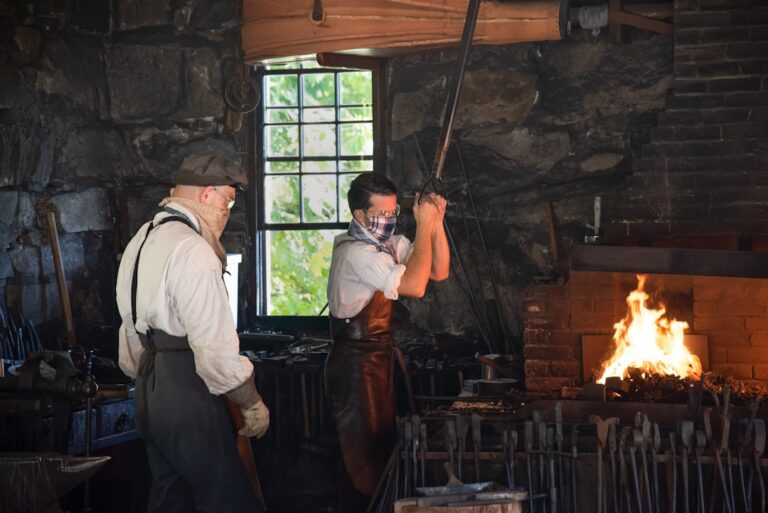
In the annals of human history, the birth of metallurgy marks a pivotal moment that transformed our relationship with the natural world. As we look back to the early days of metalworking, we find ourselves in a time when our ancestors first discovered the potential of metals. This discovery was not merely a technological advancement; it was a revolution that laid the groundwork for the development of civilizations.
The earliest known metalworking dates back to around 6000 BCE, when copper was first used in the Near East. Initially, this metal was utilized in its native form, requiring little more than the ability to hammer it into shape. The simplicity of this process allowed our ancestors to create tools and ornaments that were both functional and aesthetically pleasing.
As we delve deeper into this era, we recognize that the transition from stone to metal was not instantaneous. It involved a gradual evolution of techniques and an understanding of materials. The advent of smelting, which allowed for the extraction of metals from ores, marked a significant leap forward.
By heating copper ores in a fire, our ancestors learned to produce molten metal, which could then be cast into various shapes. This innovation opened up new possibilities for tool-making and weaponry, leading to advancements that would shape societies for millennia. The ability to create stronger and more durable tools fundamentally changed agricultural practices, warfare, and craftsmanship, setting the stage for the rise of complex societies.
Key Takeaways
- The birth of metallurgy marked the early days of metalworking, leading to the development of tools and weapons.
- The blacksmith played a crucial role in ancient societies, creating essential items and contributing to the economy.
- Blacksmithing techniques and tools evolved over time, leading to advancements in metalworking and craftsmanship.
- The blacksmith held cultural and spiritual significance in many ancient societies, often being revered as a skilled artisan.
- Blacksmithing was prevalent in ancient civilizations such as Egypt and Mesopotamia, contributing to their technological advancements and artistic achievements.
The Role of the Blacksmith in Ancient Societies
As metallurgy evolved, so too did the role of the blacksmith within ancient societies. We can envision the blacksmith as a central figure in the community, revered not only for their skill but also for their ability to manipulate fire and metal. In many cultures, blacksmiths were seen as magicians or artisans with a unique connection to the elements.
Their workshops became hubs of activity, where villagers gathered not only to commission tools and weapons but also to share stories and forge social bonds. The blacksmith’s forge was often a place of transformation, where raw materials were turned into objects of utility and beauty. The blacksmith’s contributions extended far beyond mere craftsmanship.
In many ancient societies, they played a crucial role in trade and economy. The tools they produced were essential for agriculture, construction, and warfare, making them indispensable to the functioning of society. As we reflect on this dynamic, we see that blacksmiths were not just laborers; they were innovators who pushed the boundaries of what was possible with metal.
Their work enabled advancements in various fields, from agriculture to architecture, and their influence can still be felt in modern industries today.
The Evolution of Blacksmithing Techniques and Tools

As we trace the evolution of blacksmithing techniques and tools through history, we witness a remarkable journey marked by innovation and adaptation. Early blacksmiths relied on simple tools such as hammers and anvils, but as demand for more complex items grew, so did their repertoire. The introduction of bellows allowed for higher temperatures in the forge, enabling blacksmiths to work with a wider range of metals and create more intricate designs.
This technological advancement not only improved efficiency but also expanded the creative possibilities for artisans. Over time, we see the emergence of specialized tools that catered to specific tasks within blacksmithing. Tongs, chisels, and punches became essential instruments in the blacksmith’s toolkit, allowing for greater precision and control during the forging process.
As we explore these developments, we recognize that blacksmithing was not a static craft; it evolved in response to changing needs and societal demands. The ability to adapt and innovate is what set skilled blacksmiths apart from their peers, allowing them to create unique pieces that reflected both functionality and artistry.
The Cultural and Spiritual Significance of the Blacksmith
| Aspect | Significance |
|---|---|
| Historical Role | The blacksmith played a crucial role in shaping and maintaining the tools and weapons of a community, contributing to its survival and development. |
| Cultural Symbolism | The blacksmith is often seen as a symbol of strength, skill, and creativity, representing the ability to transform raw materials into useful and valuable objects. |
| Spiritual Connection | In many cultures, the blacksmith is associated with spiritual beliefs and rituals, often being considered a mediator between the physical and spiritual worlds. |
| Artistic Expression | Blacksmithing is also seen as a form of artistic expression, with intricate designs and craftsmanship being highly valued in many societies. |
Beyond their practical contributions, blacksmiths held a unique cultural and spiritual significance in many ancient societies. We often find that they were regarded as custodians of knowledge and tradition, passing down their skills through generations. In various cultures, blacksmithing was intertwined with mythology and spirituality; it was believed that blacksmiths possessed a special connection to the divine.
In addition to their spiritual role, blacksmiths often participated in rituals and ceremonies that celebrated their craft. We can imagine communities gathering around the forge during important events, such as weddings or harvest festivals, where the blacksmith would create symbolic items as offerings or gifts.
This intertwining of craft and culture highlights the profound respect that societies had for blacksmiths and their work. Their creations were not merely functional; they were imbued with meaning and significance that transcended their physical form.
Blacksmithing in Ancient Civilizations: From Egypt to Mesopotamia
As we explore blacksmithing in ancient civilizations such as Egypt and Mesopotamia, we uncover a rich tapestry of innovation and artistry. In Egypt, blacksmiths played a vital role in producing tools for agriculture and construction, as well as weapons for warfare. The Egyptians were known for their advanced techniques in metalworking, including goldsmithing and bronze casting.
We can envision skilled artisans meticulously crafting intricate jewelry and ceremonial items that showcased their mastery over metal. In Mesopotamia, blacksmithing flourished alongside the rise of urban centers like Uruk and Babylon. Here, we see evidence of advanced metallurgy with the use of bronze—a significant advancement over copper—that revolutionized tool-making and weaponry.
The blacksmiths of Mesopotamia were not only craftsmen but also key players in trade networks that spanned vast distances. Their ability to produce high-quality metal goods made them sought after by neighboring cultures, further solidifying their importance within society.
The Blacksmith in Mythology and Folklore

The figure of the blacksmith has long captured our imagination in mythology and folklore across various cultures. In many traditions, blacksmiths are portrayed as heroic figures endowed with extraordinary skills and powers. For instance, in Greek mythology, Hephaestus is revered as the god of fire and metalworking, known for crafting weapons for gods and heroes alike.
His story reflects the deep-seated belief in the transformative power of fire and metal—a theme that resonates throughout many cultures. Folklore often depicts blacksmiths as wise figures who possess knowledge beyond mere craftsmanship. They are frequently portrayed as mediators between the human world and the divine, capable of forging not only physical objects but also destinies.
In tales from various cultures, we encounter blacksmiths who create magical items or perform feats that defy explanation. These narratives highlight our fascination with the craft and its practitioners, elevating them to legendary status while underscoring their integral role in shaping cultural identity.
The Spread of Blacksmithing Knowledge: Trade and Exchange in the Ancient World
The spread of blacksmithing knowledge across ancient civilizations was facilitated by trade routes that connected diverse cultures. As we examine these networks, we see how ideas and techniques traveled alongside goods, enriching societies along the way. The Silk Road is perhaps one of the most famous examples of such exchange; it not only facilitated trade in silk but also allowed for the sharing of metallurgical knowledge between East and West.
Through these interactions, blacksmiths learned from one another, adopting new methods and refining their craft. We can imagine artisans from different regions gathering at markets or fairs to showcase their skills while exchanging ideas about techniques or tools. This cross-pollination of knowledge led to innovations that would have lasting impacts on metalworking practices worldwide.
As we reflect on this interconnectedness, we recognize that blacksmithing was not just a localized craft; it was part of a broader tapestry of human ingenuity that transcended geographical boundaries.
The Legacy of Ancient Blacksmithing: Influence on Modern Metalworking
As we consider the legacy of ancient blacksmithing, it becomes clear that its influence extends far beyond its historical context. The techniques developed by early blacksmiths laid the foundation for modern metalworking practices that continue to evolve today. From traditional forging methods to contemporary welding techniques, we see echoes of ancient craftsmanship in our current approaches to working with metal.
Moreover, the cultural significance attributed to blacksmithing persists in contemporary society. We find a resurgence of interest in artisanal crafts as people seek to reconnect with traditional skills and values. Modern blacksmiths often draw inspiration from their ancient predecessors, blending time-honored techniques with innovative designs to create unique pieces that resonate with contemporary audiences.
This revival speaks to our enduring fascination with craftsmanship and our desire to preserve the rich heritage left behind by those who came before us. In conclusion, as we reflect on the journey of metallurgy from its early days to its profound impact on modern society, we recognize that blacksmithing is more than just a craft; it is a testament to human creativity and resilience.
If you are interested in learning more about the origins of blacksmithing, I recommend checking out the article “Hello World” on Far Hills Forge’s website. This article delves into the history and evolution of blacksmithing, providing valuable insights into how this ancient craft has shaped civilizations throughout the ages. You can read the article here.