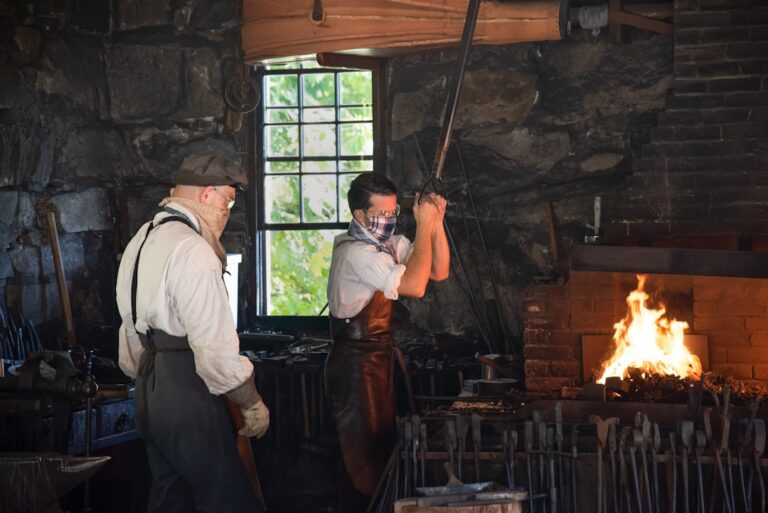
In the annals of history, few trades have held as much significance as blacksmithing during the medieval period. This craft was not merely a means of livelihood; it was a cornerstone of society, providing essential tools, weapons, and armor that shaped the very fabric of life in the Middle Ages. As we delve into the world of medieval blacksmithing, we find ourselves transported to a time when the clang of hammer on anvil echoed through bustling villages and fortified castles.
The blacksmith was revered not only for their skill but also for their ability to transform raw materials into objects of utility and beauty. The role of the blacksmith extended far beyond mere metalworking. They were often seen as magicians of their time, wielding fire and metal to create items that were both functional and artistic.
From horseshoes that ensured the mobility of knights to intricate ironwork that adorned the gates of noble estates, blacksmiths were integral to the daily lives of people in medieval society. As we explore this fascinating craft, we will uncover the tools, techniques, and artistry that defined blacksmithing in the Middle Ages, revealing how this ancient trade continues to influence modern craftsmanship.
Key Takeaways
- Medieval blacksmithing is a traditional craft that has been practiced for centuries, creating armor, weapons, and ornamental metalwork.
- Understanding the tools and materials used in blacksmithing is essential for mastering the craft, including the anvil, hammer, tongs, and various types of metal.
- Basic techniques for shaping metal include forging, bending, twisting, and punching, which are fundamental skills for creating functional and decorative metalwork.
- Advanced techniques for ornamental work involve intricate designs, such as scrollwork, leaf forms, and decorative twists, adding artistic flair to the metalwork.
- Heat treatment and tempering are crucial processes in blacksmithing to achieve the desired hardness, strength, and durability of the metal, ensuring the quality of the finished products.
Understanding the Tools and Materials
To truly appreciate the art of medieval blacksmithing, we must first familiarize ourselves with the tools and materials that were essential to the craft. The blacksmith’s workshop, or forge, was a hub of activity, filled with an array of tools designed for specific tasks. The most iconic of these tools is undoubtedly the anvil, a heavy block of iron or steel upon which metal is shaped.
Its flat surface provided a stable base for hammering, while its horned end allowed for bending and shaping metal into curves. In addition to the anvil, we find a variety of hammers, tongs, and chisels, each serving a unique purpose in the blacksmith’s repertoire. Hammers varied in size and weight, allowing smiths to perform delicate work or deliver powerful blows as needed.
Tongs were indispensable for gripping hot metal safely, while chisels enabled intricate designs to be carved into surfaces. The materials used in blacksmithing were equally important; iron was the primary metal worked with, prized for its malleability and strength. As we explore further, we will discover how these tools and materials came together to create remarkable works of art and utility.
Basic Techniques for Shaping Metal
At the heart of blacksmithing lies a series of fundamental techniques that allow artisans to shape metal into desired forms. The process begins with heating the metal in a forge until it reaches a malleable state, glowing red-hot and ready for manipulation. Once heated, the smith employs various hammering techniques to shape the metal on the anvil.
One of the most basic techniques is known as “drawing out,” where the smith elongates a piece of metal by striking it repeatedly at one end while holding the other end steady. Another essential technique is “upsetting,” which involves thickening a section of metal by hammering it downwards. This method is particularly useful for creating strong joints or adding mass to specific areas of a piece.
As we practice these techniques, we begin to understand the rhythm and flow of working with metal—how each strike must be deliberate and purposeful to achieve the desired outcome. Mastery of these basic techniques lays the foundation for more complex projects and allows us to appreciate the skill involved in transforming raw materials into functional objects.
Advanced Techniques for Ornamental Work
| Technique | Description | Benefits |
|---|---|---|
| Repoussé | Metalworking technique in which a malleable metal is shaped by hammering from the reverse side to create a design in low relief. | Creates intricate designs and textures on metal surfaces. |
| Chasing | Decorative metalworking technique in which a design is hammered into the front of a metal object. | Allows for fine detailing and refinement of designs. |
| Engraving | The practice of incising a design onto a hard, usually flat surface by cutting grooves into it. | Produces precise and detailed designs on metal, wood, or other materials. |
| Filigree | Delicate and intricate ornamental work made from fine twisted wire, typically of gold and silver, and soldered together or arranged in a pattern. | Creates lacy and decorative patterns for jewelry and metalwork. |
As we progress in our understanding of medieval blacksmithing, we encounter advanced techniques that elevate our work from mere functionality to artistry. Ornamental blacksmithing involves creating intricate designs and decorative elements that enhance the aesthetic appeal of metal objects. One such technique is “scrolling,” where metal is bent into graceful curves and spirals, often used in gates, railings, and furniture accents.
This technique requires precision and an eye for design, as each scroll must be uniform and harmonious with the overall piece. Another advanced technique is “forge welding,” which allows smiths to join two pieces of metal together without the use of additional materials like rivets or solder. By heating both pieces until they are red-hot and then hammering them together, a strong bond is formed.
This technique not only strengthens joints but also opens up new possibilities for creating complex shapes and structures. As we delve deeper into ornamental work, we discover how these advanced techniques can transform simple items into stunning works of art that reflect both skill and creativity.
Heat Treatment and Tempering
An essential aspect of blacksmithing that cannot be overlooked is heat treatment and tempering. These processes are crucial for enhancing the properties of metal, ensuring that it possesses both strength and flexibility. After shaping a piece, it is often necessary to harden it through a process called quenching.
This involves heating the metal to a high temperature and then rapidly cooling it in water or oil. The sudden temperature change alters the molecular structure of the metal, resulting in increased hardness. However, hardening alone can make metal brittle, which is where tempering comes into play.
This process involves reheating the hardened metal to a lower temperature and then allowing it to cool slowly. Tempering reduces brittleness while maintaining strength, creating a balanced material suitable for various applications. As we explore heat treatment and tempering further, we gain insight into how these techniques not only enhance performance but also ensure longevity in our creations.
Joinery and Welding Methods
Riveting: A Traditional Method
One traditional method is riveting, where holes are drilled into overlapping pieces of metal, and a rivet is inserted before being hammered flat on both sides to secure the joint. This technique was widely used in armor-making and construction, providing strong connections that could withstand significant stress.
Forge Welding: A Skilled Technique
Another method worth exploring is forge welding, which involves heating two pieces of metal until they are red-hot and then hammering them together until they fuse into one solid piece.
The Aesthetic Appeal of Joinery Methods
As we practice these joinery methods, we begin to appreciate how they contribute not only to structural integrity but also to the overall aesthetic appeal of our creations.
Creating Medieval Armor and Weapons
One of the most fascinating aspects of medieval blacksmithing is its role in creating armor and weapons—items that were not only functional but also steeped in history and tradition. The process of crafting armor involved multiple techniques, including shaping plates through hammering and using joinery methods to create articulated pieces that allowed for mobility while providing protection. Each suit of armor was custom-fitted to its wearer, showcasing both craftsmanship and individuality.
Weapons such as swords and axes were equally significant in medieval society. The creation of a sword involved careful attention to detail; from selecting high-quality steel to forging blades with precise geometry for optimal balance and cutting ability. Techniques like differential hardening were employed to create blades with a hard edge and a softer spine, enhancing performance during combat.
As we immerse ourselves in this aspect of blacksmithing, we gain insight into how these creations were not merely tools but symbols of power and status in medieval culture.
Preserving and Honing the Craft for Modern Applications
As we reflect on our journey through medieval blacksmithing, it becomes clear that this ancient craft has not only survived but thrived in modern times. Today, many artisans continue to practice traditional techniques while also incorporating contemporary innovations into their work. The revival of interest in handmade goods has led to a resurgence in blacksmithing as both an art form and a practical trade.
We find ourselves at a unique crossroads where ancient skills meet modern applications. Blacksmiths today create everything from custom furniture to artistic sculptures, blending functionality with aesthetic appeal. Workshops around the world offer classes that teach both beginners and experienced craftsmen how to hone their skills while preserving traditional methods.
As we embrace this craft’s rich history, we also recognize its relevance in today’s world—a testament to human creativity and resilience that continues to inspire future generations. In conclusion, our exploration of medieval blacksmithing reveals a craft deeply rooted in history yet vibrantly alive today. From understanding tools and techniques to creating intricate works of art, we have uncovered the essence of this timeless trade.
As we continue to preserve and innovate within this craft, we honor those who came before us while paving the way for future artisans who will carry on this remarkable legacy.
If you are interested in learning more about medieval blacksmithing, be sure to check out the website Far Hills Forge. This site offers a wealth of information on traditional blacksmithing techniques and tools. One article that may be of interest is their post titled “Hello World” which provides an introduction to the world of blacksmithing and the history behind this ancient craft. Visit here to read more about it.