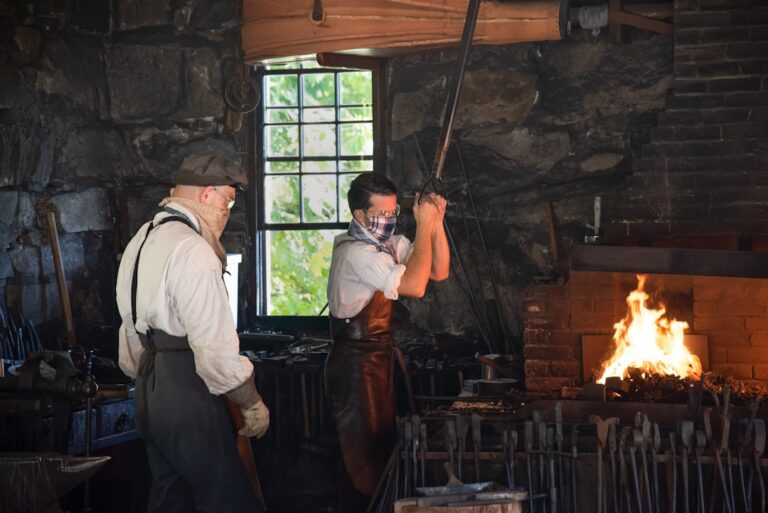
Blacksmithing is an ancient craft that has played a pivotal role in the development of human civilization. Its roots can be traced back to the Iron Age, around 1200 BCE, when early humans discovered the ability to extract iron from ore and forge it into tools and weapons. This transformative period marked a significant shift from the Bronze Age, as iron became the material of choice for creating stronger and more durable implements.
As we delve into the history of blacksmithing, we find that it is not merely a trade but a vital part of our cultural heritage, influencing everything from warfare to agriculture. Throughout the centuries, blacksmithing evolved alongside technological advancements. In medieval Europe, blacksmiths were revered as essential members of society, crafting everything from horseshoes to intricate armor.
They were often seen as magicians, wielding fire and metal to create objects of both utility and beauty. The Industrial Revolution brought about significant changes in the craft, introducing mechanization and mass production. However, despite these advancements, the traditional methods of blacksmithing have endured, with many artisans today still practicing techniques that have been passed down through generations.
This rich history not only highlights the importance of blacksmithing in our past but also serves as a foundation for those of us who wish to explore this timeless craft.
Key Takeaways
- Blacksmithing has a rich history dating back to ancient times, with the craft evolving over centuries to become an essential part of metalworking and toolmaking.
- Essential tools and equipment for beginner forges include a forge, anvil, hammer, tongs, and safety gear such as gloves and eye protection.
- Safety precautions for blacksmithing are crucial and include wearing protective gear, maintaining a clean and organized workspace, and being mindful of heat and fire hazards.
- Basic techniques and skills for blacksmithing include forging, shaping, tempering, and welding metal to create various objects and tools.
- Choosing the right materials for blacksmithing projects is important, with options including steel, iron, and other metals that can be heated and shaped effectively.
- Setting up a beginner forge workspace involves creating a well-ventilated area with a sturdy workbench, proper lighting, and storage for tools and materials.
- Tips for maintaining and caring for blacksmithing tools include regular cleaning, proper storage, and occasional sharpening or reconditioning.
- Resources for further learning and development in blacksmithing include workshops, classes, online tutorials, and books that can help beginners improve their skills and knowledge in the craft.
Essential Tools and Equipment for Beginner Forge
As we embark on our blacksmithing journey, it is crucial to familiarize ourselves with the essential tools and equipment that will form the backbone of our forge. At the heart of any blacksmithing setup is the forge itself, which serves as the source of heat needed to manipulate metal. For beginners, a simple coal or propane forge can be an excellent starting point.
These forges allow us to reach the high temperatures necessary for forging while being relatively easy to set up and maintain. In addition to the forge, we will need a variety of hand tools to shape and refine our creations. A hammer is perhaps the most iconic tool in blacksmithing; it allows us to strike and shape hot metal effectively.
We should also invest in tongs, which are essential for holding hot pieces safely while we work on them. Anvil is another critical component of our setup, providing a sturdy surface for shaping metal. As we gather these tools, we must remember that quality matters; investing in well-made equipment will enhance our experience and results as we learn the craft.
Safety Precautions for Blacksmithing

Safety should always be our top priority when engaging in blacksmithing. The combination of heat, sharp tools, and heavy materials can pose significant risks if we are not careful. First and foremost, we must equip ourselves with appropriate personal protective equipment (PPE).
This includes safety glasses to protect our eyes from flying sparks and debris, gloves to shield our hands from heat and sharp edges, and sturdy boots to protect our feet from falling objects. Moreover, we should ensure that our workspace is organized and free from hazards. Keeping flammable materials away from the forge and maintaining a clean area will help prevent accidents.
It is also wise to have a fire extinguisher nearby in case of emergencies. As we work with hot metal, we must remain vigilant and focused on our tasks, avoiding distractions that could lead to mishaps. By adhering to these safety precautions, we can enjoy our blacksmithing experience while minimizing risks.
Basic Techniques and Skills for Blacksmithing
| Technique/Skill | Description |
|---|---|
| Forging | The process of shaping metal using heat and force, typically with a hammer and anvil. |
| Tempering | Heating and cooling metal to improve its hardness and toughness. |
| Welding | Joining metal pieces together by heating and melting them, often using a filler material. |
| Grinding | Removing material from metal using an abrasive wheel to achieve the desired shape or smoothness. |
| Annealing | Heating and slowly cooling metal to relieve internal stresses and make it more workable. |
As we begin to explore the world of blacksmithing, mastering basic techniques and skills is essential for our development as artisans. One of the fundamental skills we will learn is how to heat metal properly. Understanding how to achieve the right temperature is crucial; too hot, and the metal may become brittle; too cool, and it will be challenging to shape.
We should practice heating metal evenly and recognizing when it reaches a workable state. Once we have mastered heating, we can move on to shaping techniques such as drawing out, bending, and twisting. Drawing out involves elongating a piece of metal by hammering it on an anvil, while bending allows us to create curves and angles.
Twisting adds texture and design elements to our work. Each technique requires practice and patience, but as we refine our skills, we will begin to see our creations take shape. Additionally, learning how to properly finish our pieces through techniques like grinding and polishing will elevate our work from functional to beautiful.
Choosing the Right Materials for Blacksmithing Projects
Selecting the right materials is a critical aspect of successful blacksmithing projects. As beginners, we should start with mild steel, which is forgiving and easy to work with. Mild steel has a low carbon content, making it less likely to crack or break during forging.
It is also readily available at most hardware stores or metal suppliers, making it an accessible choice for our initial projects. As we gain confidence and experience, we can experiment with other materials such as tool steel or high-carbon steel for specific applications. Each type of steel has its unique properties that affect how it behaves during forging and its final use.
For instance, tool steel is ideal for making cutting tools due to its hardness and edge retention.
Setting Up Your Beginner Forge Workspace

Creating an efficient workspace is vital for our success in blacksmithing. We should begin by selecting a suitable location that provides adequate ventilation and space for movement. A well-ventilated area will help dissipate smoke and fumes generated by the forge, ensuring a safer environment for us to work in.
Additionally, having enough room allows us to maneuver around our tools without feeling cramped or restricted. Once we have chosen a location, we can set up our forge and anvil in a way that promotes workflow. Positioning the forge close to the anvil will minimize unnecessary movement while working on projects.
We should also organize our tools within easy reach, perhaps using a tool rack or bench to keep everything tidy. By establishing an organized workspace, we can focus on honing our skills without distractions or frustrations.
Tips for Maintaining and Caring for Blacksmithing Tools
Proper maintenance of our blacksmithing tools is essential for ensuring their longevity and effectiveness. Regular cleaning after each use will help prevent rust buildup on hammers, tongs, and other tools. We should wipe down metal surfaces with oil or a rust inhibitor to protect them from moisture in the air.
Additionally, inspecting tools for any signs of wear or damage will allow us to address issues before they become more significant problems. Sharpening our tools is another critical aspect of maintenance that cannot be overlooked. A sharp hammer face or well-maintained tongs will enhance our ability to work efficiently and accurately.
We should invest time in learning how to sharpen our tools correctly using files or grinders, ensuring they remain in optimal condition for all our projects.
Resources for Further Learning and Development in Blacksmithing
As we continue on our blacksmithing journey, seeking out resources for further learning can significantly enhance our skills and knowledge. Numerous books are available that cover everything from basic techniques to advanced projects, providing valuable insights into the craft’s history and artistry. We can also explore online tutorials and videos that demonstrate specific techniques or projects step-by-step.
Joining local blacksmithing guilds or workshops can offer us hands-on experience and opportunities to connect with fellow enthusiasts. These communities often host events where we can learn from experienced blacksmiths while sharing tips and tricks with one another. By actively engaging with these resources, we can deepen our understanding of blacksmithing while fostering a sense of camaraderie within this vibrant craft community.
In conclusion, embarking on a journey into blacksmithing opens up a world rich with history, creativity, and craftsmanship. By understanding its origins, equipping ourselves with essential tools, prioritizing safety, mastering techniques, choosing appropriate materials, setting up an efficient workspace, maintaining our tools diligently, and seeking further learning opportunities, we can cultivate our skills as blacksmiths while honoring this ancient art form. Together, let us forge ahead into this exciting realm where fire meets metal!
If you are a beginner looking to learn more about forging, you may want to check out the article “Hello World” on Far Hills Forge’s website. This article provides a great introduction to the world of forging and can help you get started on your journey. You can read the article here.