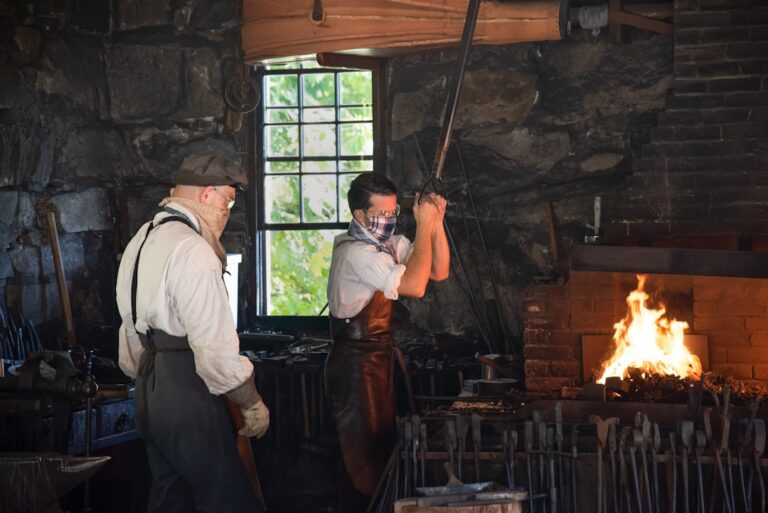
As we delve into the history of medieval blacksmith forges, we find ourselves transported to a time when these establishments were the heart of craftsmanship and innovation. The blacksmith was not merely a tradesman; he was a vital figure in the community, responsible for creating tools, weapons, and everyday items that were essential for survival. The forge itself was a hub of activity, often located near the center of a village or town, where the rhythmic sound of hammer striking metal echoed through the streets.
This auditory backdrop was a testament to the skill and artistry that blacksmiths brought to their work. The origins of blacksmithing can be traced back to ancient civilizations, but it was during the medieval period that the craft truly flourished. With the rise of feudalism and the demand for agricultural tools and weaponry, blacksmiths became indispensable.
They utilized techniques passed down through generations, combining knowledge of metallurgy with practical skills. The forge was not just a place of labor; it was a space where community members gathered, shared stories, and exchanged goods. Understanding this historical context enriches our appreciation for the craft and its significance in shaping society.
Key Takeaways
- Medieval blacksmith forges have a rich history dating back to the Middle Ages, where they were essential for crafting weapons, armor, and tools.
- Gathering the necessary materials and tools for a medieval blacksmith forge involves sourcing iron, coal, and various hand tools such as hammers, tongs, and anvils.
- Designing the layout of the forge requires careful consideration of space, ventilation, and safety measures to ensure efficient and safe operation.
- Constructing the forge structure involves building a sturdy and heat-resistant enclosure to contain the fire and withstand the intense heat generated during forging.
- Building the bellows and fire pit is crucial for controlling the airflow and maintaining the high temperatures required for shaping and manipulating metal.
Gathering the Necessary Materials and Tools
Before embarking on our journey to build a medieval blacksmith forge, we must first gather the necessary materials and tools. The foundation of any successful forge lies in the quality of its components. We will need a variety of metals, including iron and steel, which are essential for forging tools and weapons.
In addition to metals, we must also collect tools that will aid us in our blacksmithing endeavors. Essential tools include hammers, tongs, chisels, and files.
Each tool serves a specific purpose, allowing us to manipulate metal with precision and creativity. We should also consider investing in protective gear such as gloves, aprons, and safety goggles to ensure our safety while working in the forge. By carefully selecting our materials and tools, we lay the groundwork for a successful blacksmithing experience that honors the traditions of our medieval predecessors.
Designing the Layout of the Forge

With our materials and tools in hand, we can now turn our attention to designing the layout of our forge. A well-thought-out design is crucial for maximizing efficiency and ensuring safety while we work. We should begin by considering the flow of our workspace.
The forge itself will be at the center, with the fire pit positioned for easy access. Surrounding this area, we can designate spaces for our anvil, workbench, and storage for tools and materials. As we sketch out our design, we must also take into account ventilation and safety measures.
Proper airflow is essential to prevent smoke buildup and ensure that we can work comfortably. We might incorporate windows or vents into our design to facilitate this. Additionally, we should plan for adequate space between each workstation to minimize accidents and allow for easy movement around the forge. By carefully considering these elements in our layout, we create an environment that fosters creativity while prioritizing safety.
Constructing the Forge Structure
| Metrics | Value |
|---|---|
| Number of workers | 25 |
| Construction time | 3 months |
| Cost | 500,000 |
| Materials used | Steel, concrete |
Once we have finalized our design, it is time to begin constructing the forge structure itself. The materials we choose for this construction will play a significant role in the durability and functionality of our forge. Traditionally, medieval forges were built using stone or brick, providing excellent heat retention and stability.
We can source these materials from local quarries or building supply stores, ensuring that they are suitable for high-temperature applications. As we begin building, we should pay close attention to the foundation of our forge. A solid base is essential to support the weight of the structure and withstand the rigors of blacksmithing activities.
We can start by laying a sturdy foundation using concrete or stone blocks, ensuring it is level and secure. Once the foundation is complete, we can construct the walls and roof, incorporating insulation materials to help retain heat during operation. This careful construction process will result in a forge that not only looks authentic but also functions effectively for our blacksmithing needs.
Building the Bellows and Fire Pit
The heart of any blacksmith forge is undoubtedly the fire pit, where raw metal is transformed into functional objects through heat and skill. To achieve this, we must build a fire pit that can withstand high temperatures while providing adequate airflow to fuel the fire. Traditionally, fire pits were constructed using firebricks or clay to create a durable lining that could endure intense heat without cracking.
In conjunction with the fire pit, we must also create bellows to supply air to the flames. Bellows are essential for increasing airflow and raising temperatures within the fire pit, allowing us to reach the necessary heat levels for forging metal. We can construct bellows using wood and leather or canvas, ensuring they are airtight to maximize efficiency.
As we pump air into the fire pit using our bellows, we will witness firsthand how this simple mechanism plays a crucial role in our blacksmithing process.
Creating the Anvil and Workbench

With our fire pit and bellows in place, we can now focus on creating two essential components of our forge: the anvil and workbench. The anvil serves as a sturdy surface for shaping hot metal, while the workbench provides a space for organizing tools and materials during our projects. When selecting or crafting an anvil, we should look for one made from high-quality steel or iron that can withstand repeated hammer strikes without deforming.
For our workbench, we can use thick wooden planks or even repurpose old furniture to create a functional workspace. It should be sturdy enough to handle heavy tools and materials while providing ample surface area for our projects. As we set up these key components of our forge, we should also consider their placement within our layout to ensure easy access during our blacksmithing sessions.
A well-organized workspace will enhance our efficiency and creativity as we embark on our crafting journey.
Setting Up Safety Measures and Ventilation
As we immerse ourselves in the world of blacksmithing, it is imperative that we prioritize safety measures and ventilation within our forge. Working with high temperatures and heavy tools poses inherent risks, so establishing protocols to protect ourselves is essential. We should begin by equipping our workspace with fire extinguishers and first aid kits readily accessible in case of emergencies.
Ventilation is another critical aspect of safety in our forge. The smoke generated from burning coal or wood can quickly accumulate if not properly managed. We can install exhaust fans or create openings that allow fresh air to circulate while expelling smoke outside.
Additionally, wearing protective gear such as gloves, goggles, and aprons will safeguard us from burns or injuries while working with hot metal. By implementing these safety measures from the outset, we create an environment where creativity can flourish without compromising our well-being.
Maintaining and Operating the Medieval Blacksmith Forge
Finally, as we embark on our blacksmithing journey, it is essential to understand how to maintain and operate our medieval forge effectively. Regular maintenance ensures that all components function optimally while prolonging their lifespan. We should routinely check for any signs of wear or damage in our fire pit, bellows, anvil, and workbench, addressing any issues promptly to prevent accidents during operation.
Operating the forge requires a blend of skill and patience as we learn to manipulate metal through heat and hammering techniques. We should start with simple projects to hone our skills before progressing to more complex creations. As we gain experience, we will develop an appreciation for the artistry involved in blacksmithing—transforming raw materials into functional works of art that reflect both our craftsmanship and creativity.
In conclusion, building a medieval blacksmith forge is not merely about constructing a physical space; it is about embracing a rich tradition that connects us to history while allowing us to express ourselves through craftsmanship. By understanding its history, gathering materials thoughtfully, designing an efficient layout, constructing durable structures, prioritizing safety measures, and maintaining our forge diligently, we embark on a fulfilling journey into the world of blacksmithing—one that honors those who came before us while paving the way for future generations of artisans.
If you are interested in learning more about medieval blacksmith forges, you should check out the website com/’>Far Hills Forge.
This website offers a variety of resources and information about blacksmithing, including a sample page showcasing their work and a blog post titled “Hello World” that may provide further insights into the craft. Far Hills Forge is a valuable resource for anyone looking to delve deeper into the world of medieval blacksmithing.