The history of smithing and forging is a rich tapestry woven through the ages, reflecting the evolution of human civilization itself. From the earliest days of humanity, when our ancestors first discovered the potential of metals, smithing has played a crucial role in shaping societies. The art of forging metal dates back to around 3000 BC, with evidence of early blacksmiths in ancient Mesopotamia.
These skilled artisans were among the first to manipulate copper and bronze, creating tools and weapons that would change the course of history. As we delve into this fascinating past, we can see how smithing has not only been a practical craft but also a symbol of innovation and progress. As civilizations advanced, so too did the techniques and tools of smithing.
The Iron Age marked a significant turning point, as iron became the dominant material for tools and weapons. This transition was not merely a technological shift; it represented a profound change in societal structures. Blacksmiths emerged as vital figures in their communities, providing essential goods that supported agriculture, warfare, and trade.
The craft spread across continents, with each culture adding its unique flair to the art of forging. From the intricate designs of Japanese katana to the robust tools of medieval Europe, the history of smithing is a testament to human ingenuity and adaptability.
Key Takeaways
- Smithing and forging have a long history dating back to ancient civilizations, and have played a crucial role in the development of human societies.
- The tools and materials used in smithing and forging have evolved over time, but the basic principles remain the same, including the use of hammers, anvils, and various metals such as iron and steel.
- Techniques and processes in smithing and forging include heating, shaping, and cooling metals to create various objects and structures, often requiring great skill and precision.
- Blacksmiths have historically held an important role in society, providing essential tools, weapons, and equipment, and often serving as community leaders and craftsmen.
- Smithing and forging are not only practical crafts, but also forms of artistry and creativity, with many artisans creating intricate and beautiful designs in their work.
- Modern applications of smithing and forging can be found in industries such as manufacturing, construction, and art, with new technologies and materials continuing to expand the possibilities of the craft.
- Tips for mastering the craft of smithing and forging include practicing basic techniques, learning from experienced blacksmiths, and continually experimenting and refining one’s skills.
- The future of smithing and forging holds potential for innovations and trends, with advancements in materials, techniques, and technology shaping the direction of the craft in the coming years.
Tools and Materials Used in Smithing and Forging
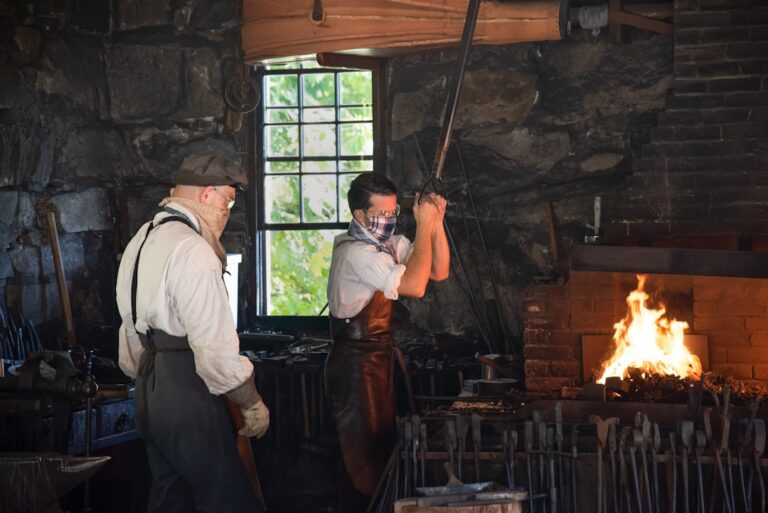
In our exploration of smithing and forging, we must consider the essential tools and materials that have defined this craft over centuries. At the heart of any blacksmith’s workshop lies the forge, where heat transforms raw metal into malleable forms. Traditionally fueled by coal or charcoal, modern forges may utilize gas or electric heat sources, allowing for greater control over temperature and efficiency.
The anvil, another cornerstone of smithing, serves as a sturdy platform for shaping metal. Its flat surface and horn allow for various techniques, from bending to flattening, making it indispensable for any blacksmith. Beyond these primary tools, we find an array of specialized instruments that enhance the smith’s capabilities.
Hammers come in various shapes and sizes, each designed for specific tasks, whether it be drawing out metal or creating intricate patterns. Tongs are equally important, providing a secure grip on hot metal while protecting the smith’s hands from burns. As we consider materials, iron and steel remain the staples of forging, but we also encounter a variety of alloys that can enhance strength and durability.
The choice of materials often reflects both the intended use of the finished product and the artistic vision of the smith.
Techniques and Processes in Smithing and Forging

The techniques employed in smithing and forging are as diverse as the cultures that practice them. One fundamental process is known as hot forging, where metal is heated to a malleable state before being shaped through hammering or pressing. This method allows for significant deformation without cracking or breaking the material.
Conversely, cold forging involves shaping metal at room temperature, which can enhance its strength through work hardening. Each technique has its advantages and applications, depending on the desired outcome. As we delve deeper into specific processes, we encounter techniques such as welding, where two pieces of metal are fused together through heat and pressure.
This skill requires precision and experience, as improper technique can lead to weak joints or structural failures. Another fascinating aspect of smithing is pattern welding, where layers of different metals are forged together to create striking visual effects. This technique not only showcases the smith’s artistry but also results in blades with unique properties, combining strength with beauty.
Through these varied techniques, we see how smithing is both a science and an art form.
The Role of Blacksmiths in Society
| Role of Blacksmiths in Society |
|---|
| 1. Crafting tools and equipment |
| 2. Repairing metal items |
| 3. Creating decorative metalwork |
| 4. Contributing to local economy |
| 5. Preserving traditional craftsmanship |
Throughout history, blacksmiths have held a unique position within their communities, serving as both craftsmen and essential service providers. In ancient times, they were often regarded as magicians or alchemists due to their ability to transform raw materials into functional objects. Their work was critical in supporting agriculture by producing tools like plows and sickles that enabled societies to thrive.
In times of war, blacksmiths became indispensable for creating weapons and armor, often working tirelessly to meet the demands of their local militias.
Many communities have celebrated their blacksmiths through festivals or guilds that honor their skills and heritage.
As we reflect on this role, we recognize that blacksmiths are not merely tradespeople; they are custodians of knowledge passed down through generations. Their expertise has shaped not only the physical landscape but also the cultural identity of their communities.
The Artistry and Creativity of Smithing and Forging
While smithing is often viewed through a utilitarian lens, it is equally an expression of artistry and creativity. The ability to manipulate metal into beautiful forms requires not only technical skill but also an imaginative vision. Many blacksmiths take pride in creating unique pieces that blend functionality with aesthetic appeal.
From ornate gates to delicate jewelry, the possibilities are limited only by the smith’s creativity and skill. The artistry in smithing can be seen in various forms, such as decorative scrollwork or intricate patterns on blades. Some blacksmiths specialize in creating custom pieces that reflect personal stories or cultural significance.
This fusion of art and craft elevates smithing beyond mere production; it becomes a medium for storytelling and self-expression. As we appreciate this artistry, we recognize that each piece forged carries with it the spirit and intention of its creator.
Modern Applications of Smithing and Forging

In today’s world, smithing and forging continue to find relevance across various industries.
In construction, forged steel is used for structural components due to its strength and durability.
The automotive industry also relies on forging processes to create essential parts that withstand high levels of stress and wear. Moreover, there has been a resurgence of interest in artisanal blacksmithing as people seek handcrafted goods that reflect quality and individuality. Custom knives, tools, and decorative items have gained popularity among consumers who appreciate the craftsmanship behind each piece.
This trend highlights a growing desire for authenticity in an increasingly mass-produced world. As we embrace these modern applications, we see how smithing remains a vital craft that adapts to contemporary needs while honoring its rich heritage.
Tips for Mastering the Craft of Smithing and Forging
For those aspiring to master the craft of smithing and forging, there are several key tips that can guide us on this journey. First and foremost, we must prioritize safety in our workshops. Working with hot metal poses inherent risks; therefore, wearing appropriate protective gear such as gloves, goggles, and aprons is essential.
Familiarizing ourselves with our tools and understanding their proper use will help prevent accidents while enhancing our efficiency. Another crucial aspect is practice—consistent practice allows us to refine our skills over time. Starting with simple projects can build our confidence before tackling more complex pieces.
Seeking mentorship from experienced blacksmiths can provide invaluable insights into techniques and best practices. Additionally, studying various styles from different cultures can inspire our creativity and broaden our understanding of this ancient craft.
The Future of Smithing and Forging: Innovations and Trends
As we look toward the future of smithing and forging, we find ourselves at an exciting crossroads where tradition meets innovation. Advances in technology are reshaping how we approach this age-old craft. For instance, computer-aided design (CAD) software allows smiths to visualize their creations before they even touch metal.
This integration of technology can streamline processes while preserving the artistry inherent in forging. Moreover, sustainability is becoming increasingly important within the industry. Many blacksmiths are exploring eco-friendly practices by sourcing materials responsibly or utilizing renewable energy sources for their forges.
This shift reflects a broader societal trend toward environmental consciousness that resonates with both artisans and consumers alike. As we embrace these innovations and trends, we can envision a future where smithing continues to thrive as both a respected craft and an evolving art form. In conclusion, our journey through the history, tools, techniques, societal roles, artistry, modern applications, mastery tips, and future trends in smithing and forging reveals a craft deeply intertwined with human experience.
As we continue to explore this fascinating world, we recognize that smithing is not merely about shaping metal; it is about shaping culture, identity, and creativity itself.
If you are interested in learning more about smithing and forging, be sure to check out the article on Far Hills Forge. This website offers valuable insights and resources for blacksmithing enthusiasts of all levels. Whether you are a beginner looking to get started or an experienced smith looking to refine your skills, Far Hills Forge has something for everyone. Be sure to explore their sample page for a taste of what they have to offer.