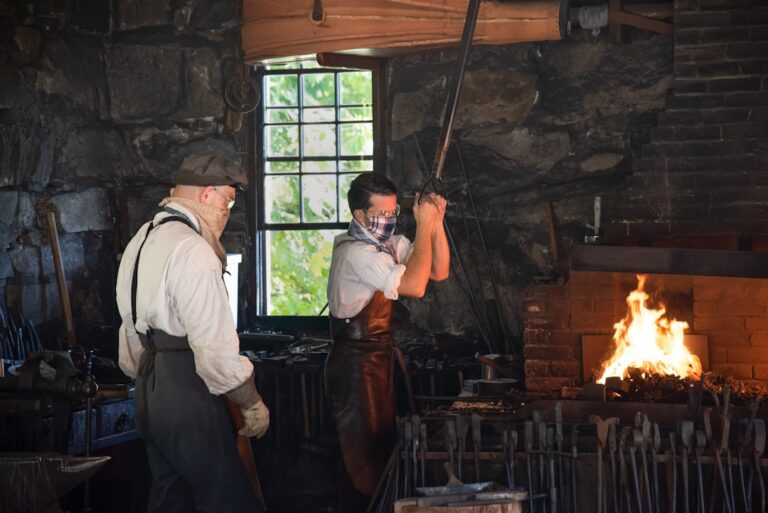
As we delve into the rich tapestry of blacksmithing, we find ourselves tracing its origins back to ancient civilizations. The craft began around 1200 BCE when the discovery of iron smelting revolutionized tool-making and weaponry. Early blacksmiths were revered figures, often seen as magicians who could transform raw materials into essential items for survival.
They forged not only tools for agriculture but also weapons for protection and hunting, making them integral to the development of societies. As we explore the historical significance of blacksmithing, we recognize that it was not merely a trade; it was a cornerstone of civilization itself. Throughout the ages, blacksmithing evolved alongside technological advancements.
The Middle Ages saw the rise of the blacksmith as a vital community member, with workshops becoming hubs of activity. The craft flourished during this period, as blacksmiths began to specialize in various areas, from creating horseshoes to intricate armor. The Renaissance brought about a renewed appreciation for artistry in metalwork, leading to the emergence of decorative blacksmithing.
As we move into the Industrial Revolution, the advent of machinery transformed the landscape of blacksmithing, introducing mass production techniques that diminished the role of the traditional blacksmith. Yet, even in modern times, the essence of blacksmithing endures, with artisans embracing both age-old techniques and contemporary innovations.
Key Takeaways
- Blacksmithing has a rich history dating back to ancient times and continues to be a valued craft in modern day society.
- Essential tools and techniques such as the anvil, hammer, and forge are still used by blacksmiths today to create intricate metalwork.
- The role of the blacksmith has evolved from being a vital member of society in the past to a modern artisan adapting to contemporary trends.
- Blacksmithing is not only a functional craft, but also an artistic one, with sculptural and decorative metalwork being a significant part of the trade.
- The blacksmith’s contribution to architecture and design, as well as their impact on sustainable and eco-friendly practices, is increasingly recognized and valued.
The Essential Tools and Techniques of the Blacksmith
In our exploration of blacksmithing, we cannot overlook the essential tools that define this ancient craft. At the heart of every blacksmith’s workshop lies the forge, where raw metal is heated to a malleable state. The forge serves as a crucible for creativity, allowing us to shape iron and steel into functional and artistic forms.
Accompanying the forge are tools such as hammers, tongs, and anvils—each playing a crucial role in the blacksmith’s repertoire. Hammers come in various shapes and sizes, enabling us to create different textures and forms in our work. Tongs are indispensable for gripping hot metal, ensuring our safety while allowing us to manipulate materials with precision.
Techniques in blacksmithing are as diverse as the tools we use. One fundamental method is forging, where we shape heated metal by hammering it against an anvil. This process requires not only physical strength but also a keen understanding of metal properties and temperature control.
Another technique is welding, which involves joining two pieces of metal together through heat and pressure. As we hone our skills, we also learn about quenching and tempering—processes that enhance the durability and flexibility of our creations. Each technique we master adds depth to our craft, allowing us to push the boundaries of what is possible in metalwork.
The Role of the Blacksmith in Society: Then and Now

Historically, blacksmiths held a revered position within their communities, serving as essential providers of tools and equipment necessary for daily life. In agrarian societies, they were indispensable for crafting plows and other farming implements that enabled food production. Their work extended beyond mere utility; blacksmiths often played a role in local economies, bartering their goods and services with other tradespeople.
As we reflect on this historical context, we recognize that blacksmiths were not just craftsmen; they were vital contributors to societal development. In contemporary society, while the role of the blacksmith has shifted due to industrialization and technological advancements, their importance remains significant. Today, many blacksmiths embrace a dual identity as artisans and entrepreneurs, creating bespoke items that cater to niche markets.
We see a resurgence in interest for handcrafted goods, with consumers increasingly valuing quality over mass production. This shift has allowed us to redefine our role within society; we are no longer just producers of functional items but also creators of art that resonates with personal stories and cultural heritage.
The Artistic Side of Blacksmithing: Sculptural and Decorative Metalwork
| Technique | Examples |
|---|---|
| Forging | Sculptures, decorative gates |
| Repoussé | Embossed metal artwork |
| Chasing | Engraved metal designs |
| Welding | Abstract metal structures |
As we delve deeper into blacksmithing, we uncover its artistic dimensions that elevate it beyond mere craftsmanship. The ability to transform metal into sculptural forms is a testament to our creativity and skill. Many contemporary blacksmiths have embraced this artistic side, producing intricate sculptures that adorn public spaces and private collections alike.
These works often reflect themes from nature or abstract concepts, showcasing our ability to convey emotion through metal. Decorative metalwork is another facet where artistry shines through. From ornate gates to delicate railings, decorative elements enhance architectural designs while showcasing our craftsmanship.
We find joy in collaborating with architects and designers to create unique pieces that complement their visions. This intersection of art and functionality allows us to push creative boundaries while remaining rooted in traditional techniques. As we continue to explore this artistic side of blacksmithing, we celebrate the fusion of utility and beauty that defines our work.
The Blacksmith as a Modern Artisan: Adapting to Contemporary Trends
In today’s fast-paced world, we find ourselves navigating a landscape that demands adaptability from artisans like us. The rise of digital technology has introduced new tools and methods that can enhance our craft while preserving traditional techniques. Many blacksmiths are now incorporating computer-aided design (CAD) software into their workflow, allowing us to visualize complex projects before they come to life in metal.
This blend of old and new empowers us to create innovative designs that resonate with contemporary aesthetics. Moreover, we are witnessing a growing movement towards sustainability within our craft. As modern artisans, we are increasingly aware of our environmental impact and are seeking ways to minimize waste and utilize eco-friendly materials.
This shift not only aligns with global trends but also enriches our practice by encouraging us to think critically about our resources. By embracing sustainable practices, we contribute positively to our communities while ensuring that the art of blacksmithing continues to thrive for future generations.
The Blacksmith’s Contribution to Architecture and Design

Evolution of the Blacksmith’s Role
As we reflect on this partnership, we recognize that our contributions extend beyond mere embellishments; they are essential components that elevate design. In contemporary architecture, the role of the blacksmith has evolved yet remains vital. We find ourselves working closely with architects who seek unique solutions for their projects.
Custom Metalwork and Innovation
Our ability to create custom metalwork allows for greater flexibility in design while ensuring that each piece is tailored to meet specific needs. This collaboration fosters innovation as we explore new materials and techniques that push the boundaries of traditional blacksmithing.
Celebrating the Legacy and Future of Blacksmithing
As we contribute to architectural design, we celebrate the enduring legacy of our craft while embracing its future possibilities.
The Blacksmith’s Impact on Sustainable and Eco-Friendly Practices
As stewards of our craft, we are increasingly aware of the importance of sustainability in blacksmithing. The environmental impact of traditional manufacturing processes has prompted many artisans like us to seek eco-friendly alternatives without compromising quality or artistry. We have begun exploring sustainable materials such as recycled metals or responsibly sourced iron, which not only reduce waste but also tell a story of resourcefulness.
Moreover, our commitment to sustainability extends beyond materials; it encompasses our entire approach to production. By adopting energy-efficient practices in our workshops—such as using forges powered by renewable energy sources—we can minimize our carbon footprint while continuing to produce high-quality work. This shift towards eco-consciousness resonates with consumers who value sustainability in their purchasing decisions, allowing us to connect with a growing audience that appreciates both craftsmanship and environmental responsibility.
The Future of Blacksmithing: Innovations and Advancements in the Field
Looking ahead, we find ourselves at an exciting crossroads in the evolution of blacksmithing. Innovations in technology continue to reshape our craft, offering new tools and methods that enhance our capabilities while preserving traditional techniques. For instance, advancements in 3D printing have opened up possibilities for creating intricate designs that were once unimaginable through conventional methods.
As we embrace these innovations, we remain committed to honoring the heritage of blacksmithing while exploring new avenues for creativity.
Workshops and classes are becoming increasingly popular as aspiring blacksmiths seek hands-on experience alongside seasoned artisans like us.
By sharing our knowledge and passion for blacksmithing, we contribute to a vibrant community that values craftsmanship and creativity. As we look toward the future, we are filled with optimism about the continued relevance and evolution of blacksmithing in an ever-changing world.
If you are interested in learning more about the art of blacksmithing, be sure to check out this article on Far Hills Forge. This website offers a wealth of information on blacksmithing techniques, tools, and projects to help you get started in this ancient craft. Whether you are a beginner or an experienced blacksmith, you are sure to find something of interest on Far Hills Forge.